FREQUENTLY ASKED QUESTIONS
Everything you need to know about asbestos testing.
-
Asbestos refers to a group of naturally occurring minerals that were widely used in building materials for their durability and fire-resistant properties.
However, asbestos fibres can pose serious health risks when inhaled, potentially leading to conditions such as asbestosis, lung cancer, and mesothelioma.
It’s important to note that asbestos is only hazardous when it is disturbed, causing fibres to become airborne and inhalable.
For this reason, sample collection and testing should always be carried out by a qualified professional to ensure safety and accuracy.
-
Asbestos can be found in many building materials used in Australian homes, workplaces and other structures, particularly those built or renovated before 1990.
Common locations include roofing and wall sheeting, eaves, ceilings, bathrooms and wet areas, vinyl flooring and backing, electrical switchboards, fencing, pipes, insulation, textured coatings, adhesives and other cement-based products.
Because asbestos-containing materials can look very similar to non-asbestos materials, it is not possible to reliably identify asbestos by appearance alone. If you are unsure, the safest approach is to have the material professionally sampled and tested before it is disturbed.
-
You can’t reliably tell whether a material contains asbestos just by looking at it. Many asbestos-containing materials look identical to modern, asbestos-free products.
The only way to confirm whether asbestos is present is to have a representative sample of the material collected and analysed by a laboratory.
If you suspect a material may contain asbestos, avoid cutting, drilling, sanding, breaking or otherwise disturbing it. Asbestest can inspect the material, safely collect a sample and provide laboratory analysis to determine whether asbestos fibres are present.
-
Asbestos-containing materials that are in good condition, sealed and left undisturbed generally pose a lower risk because the fibres are less likely to become airborne.
The risk increases when asbestos-containing materials are damaged, deteriorating, weathered, cut, drilled, sanded, broken or otherwise disturbed, as this can release asbestos fibres into the air.
If you are unsure about the condition of a suspected asbestos-containing material, it is best to have it professionally assessed before carrying out any renovation, maintenance or demolition work.
-
You should consider asbestos testing before renovating, repairing, demolishing or disturbing materials that may contain asbestos, particularly in buildings constructed or renovated before 1990.
Testing is also recommended if a suspected material is damaged, deteriorating or has been discovered unexpectedly during building work.
If you’re unsure, testing can provide clarity before work begins and help you make informed decisions about what to do next.
ABOUT ASBESTOS
-
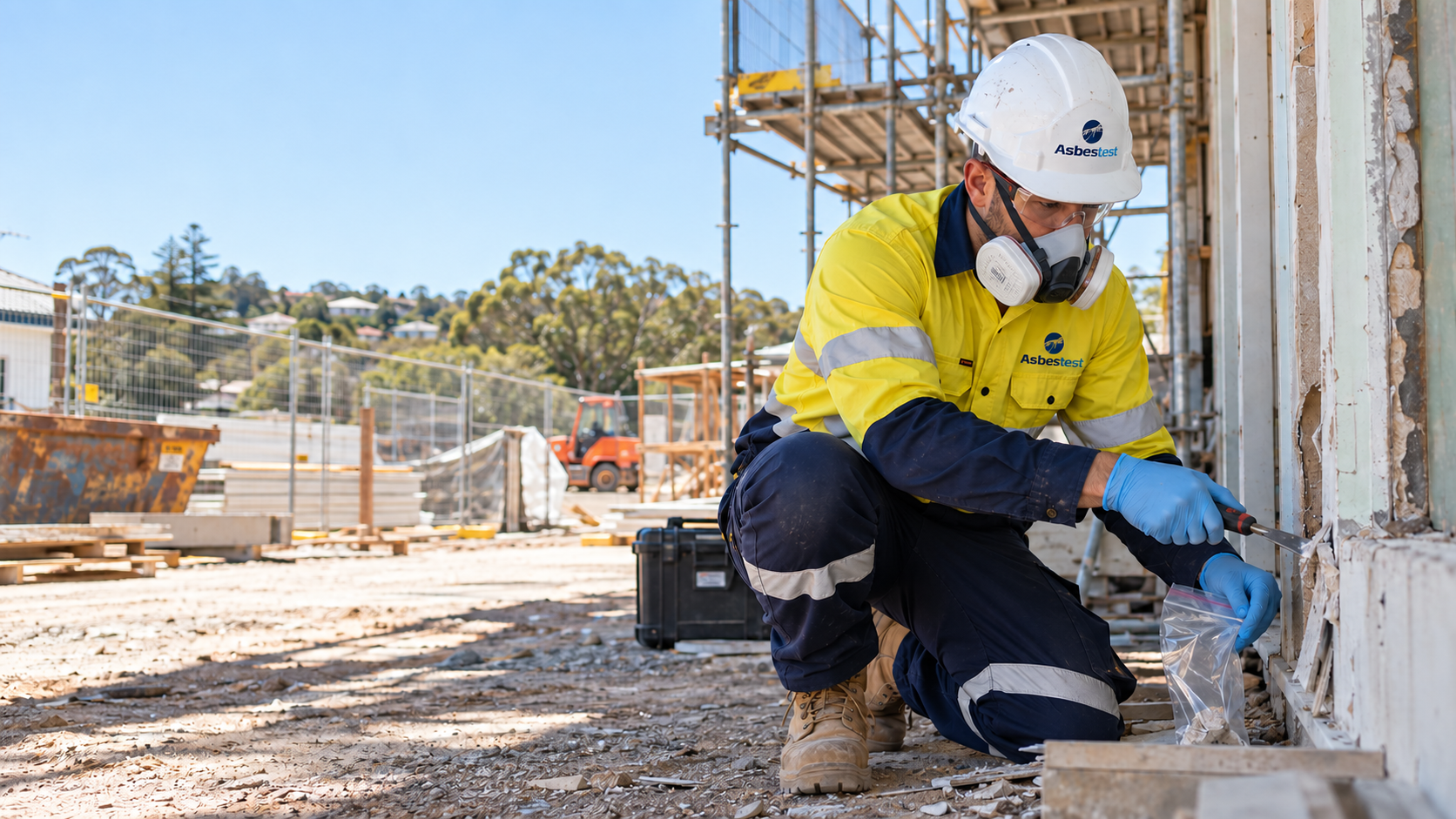
During an asbestos inspection, a qualified technician will assess the property or work area to identify materials that may contain asbestos.
The inspection typically involves a visual assessment of accessible areas, documenting suspected asbestos-containing materials and, where required, safely collecting representative samples for laboratory analysis.
Photos and site information may also be recorded to help document the location and condition of identified materials.
Once testing is complete, you’ll receive clear results outlining whether asbestos was detected and the type of asbestos fibres identified, helping you make informed decisions about the next steps.
-
We recommend that you do not collect asbestos samples yourself.
Disturbing a material that contains asbestos can release fibres into the air, particularly if it is cut, scraped, drilled or broken during sampling.
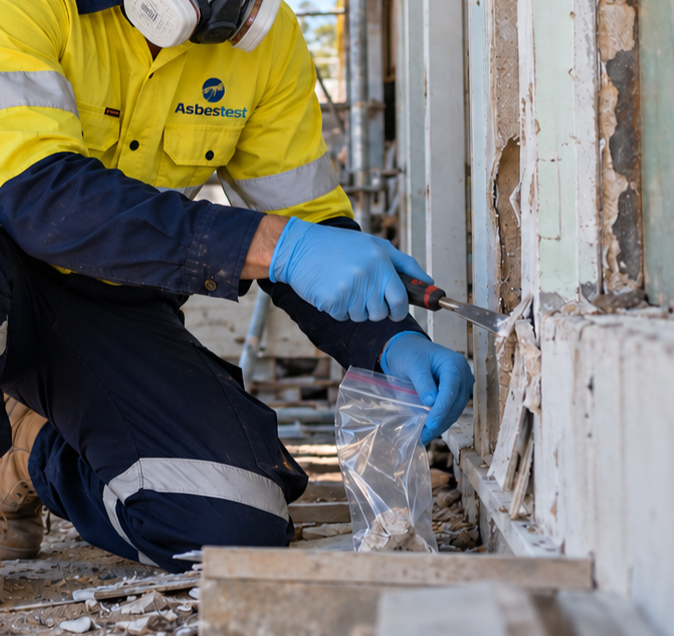
Our trained technicians can attend your property to safely collect a representative sample while minimising disturbance to the material. The sample is then securely contained, documented and submitted for laboratory analysis.
If you already have a sample or need advice about testing a particular material, contact our team and we can guide you through the safest and most appropriate next step.
-
Wherever possible, we recommend having your sample collected by an Asbestest technician.
Professional sample collection helps ensure the material is sampled safely and that the sample is representative of the area being assessed. Our technicians can identify the most appropriate location to sample, minimise disturbance to the material, document exactly where the sample was taken and ensure it is safely contained and handled.
A laboratory result can only tell you what is present in the sample provided. If a sample is collected from the wrong material or is not representative of the area of concern, the result may not provide the information you need.
For greater confidence in your results, we recommend arranging professional sample collection with Asbestest.
-
We can test a wide range of building materials that may contain asbestos, including fibre cement sheeting, roofing products, vinyl flooring and backing, adhesives, insulation products, textured coatings, ceiling and wall materials, gaskets and other suspect building materials.
Because asbestos was used in thousands of different products, it is not always possible to tell whether a material contains asbestos just by looking at it. Laboratory analysis is the most reliable way to confirm whether asbestos is present and, where identified, the type of asbestos fibres detected.
Coming soon: Asbestest is expanding our testing capabilities to include soil analysis and asbestos air monitoring, allowing us to support an even broader range of asbestos assessment and management needs.
-
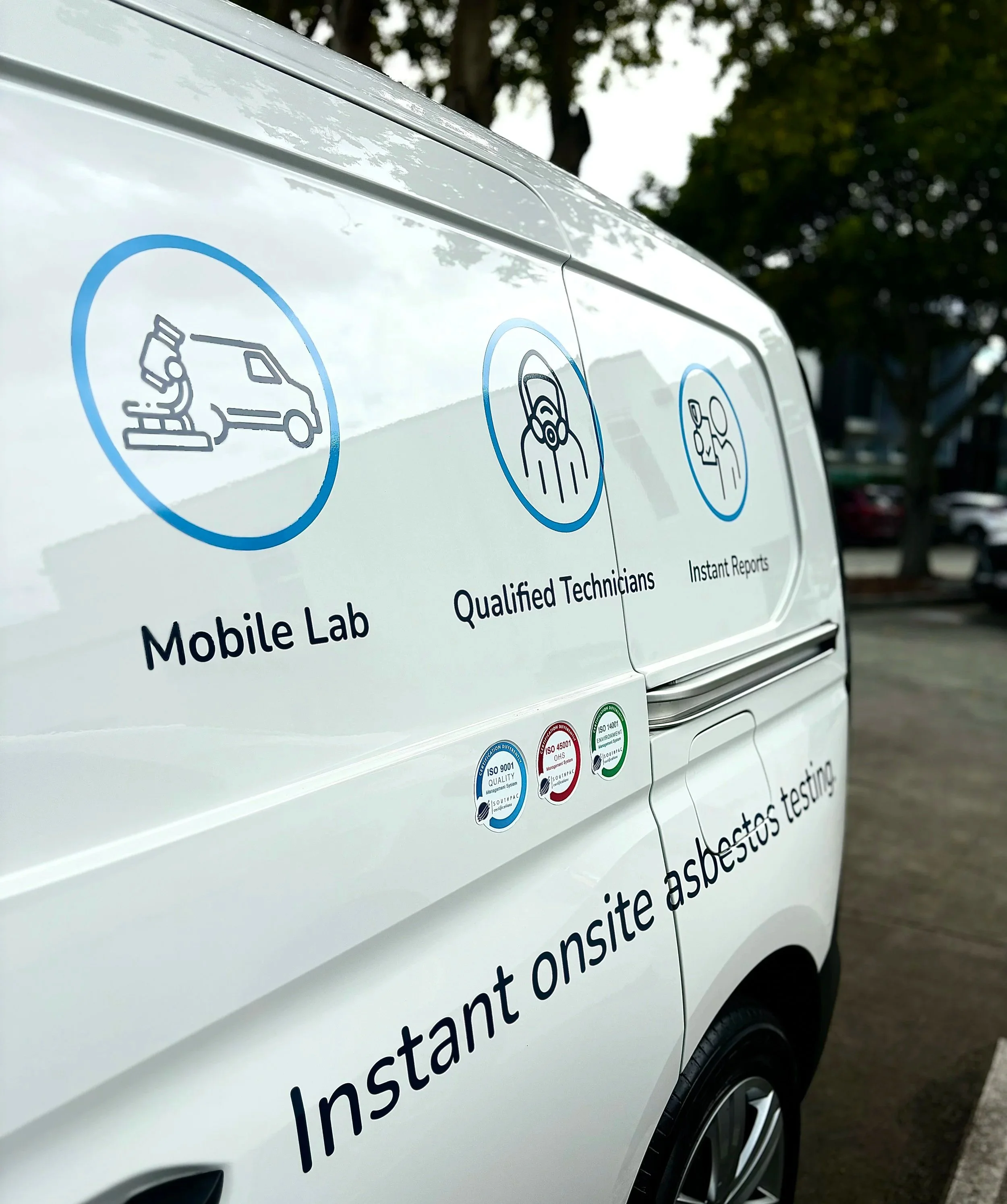
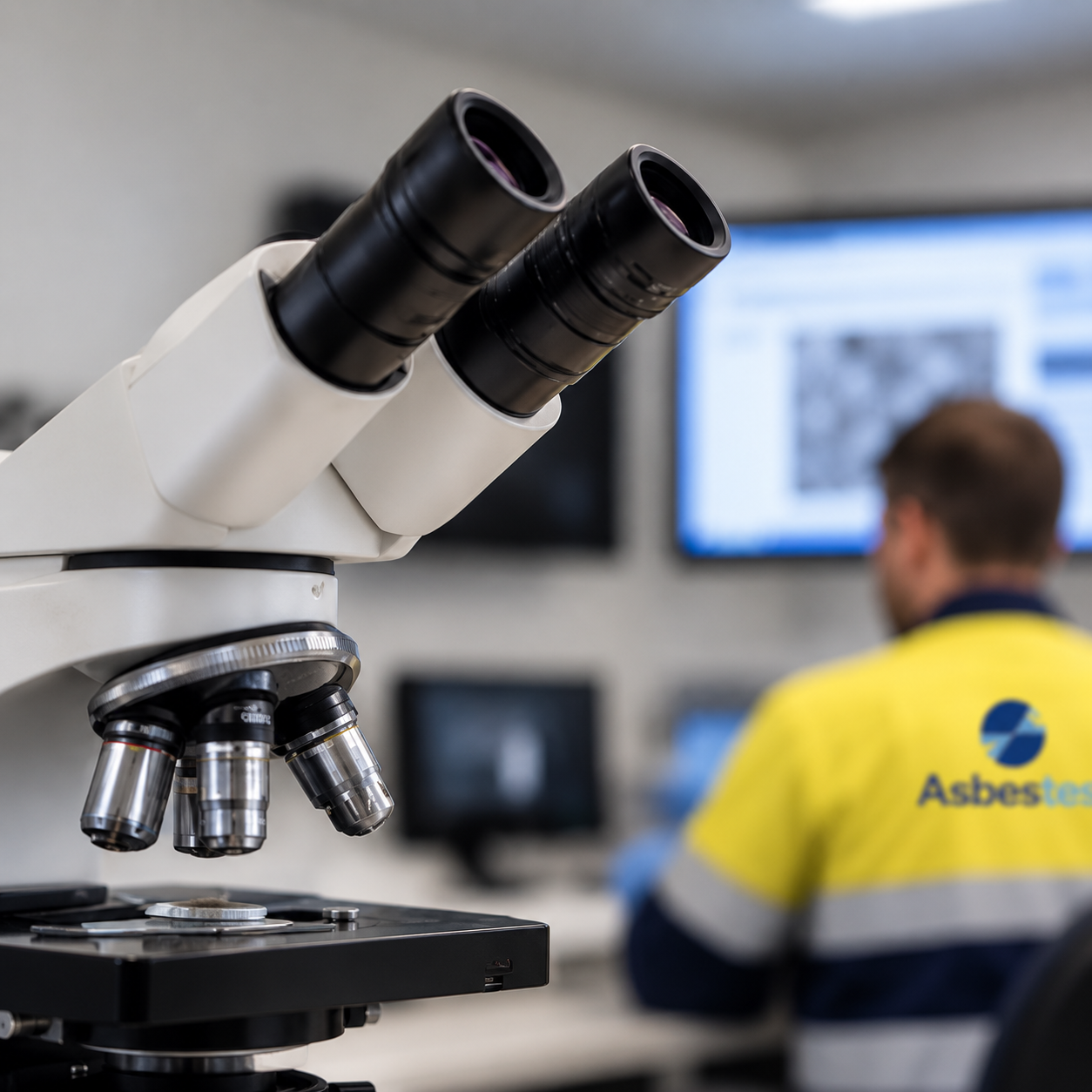
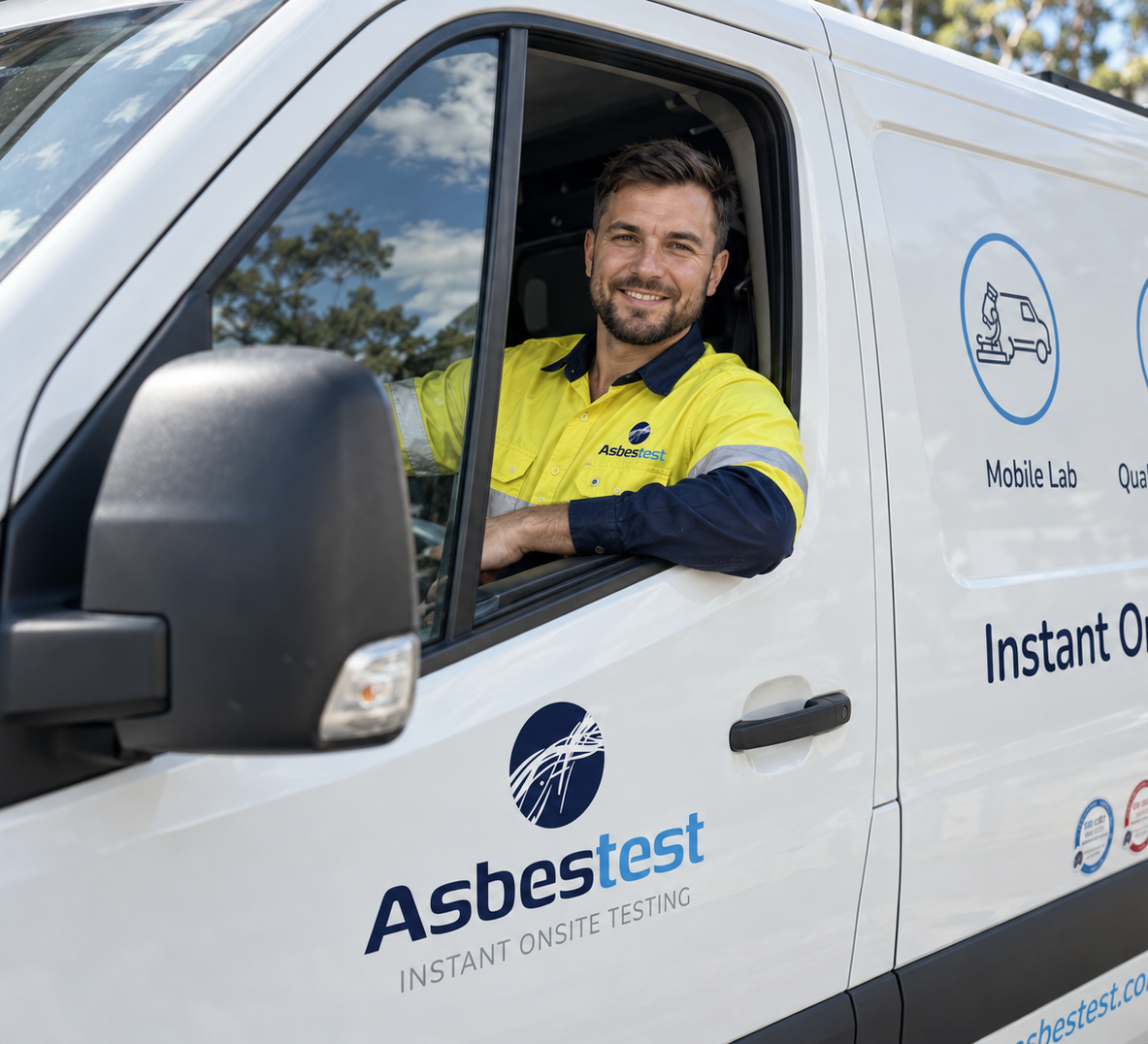
Yes. Asbestest operates mobile asbestos laboratories, allowing samples to be analysed at or near your site rather than being transported to a traditional fixed laboratory.
Our technicians can collect samples onsite using safe and representative sampling practices, with analysis completed in our purpose-built mobile laboratory.
This mobile approach allows us to provide same-day results for almost all testing, helping reduce delays and minimise downtime while works are paused awaiting asbestos results.
In some circumstances, additional analysis or testing may be required, which can affect turnaround times. If this applies to your sample, our team will let you know.
-
Yes. When asbestos sampling and testing are carried out by trained professionals using appropriate procedures and controls, the process is designed to minimise the risk of asbestos fibre release and exposure.
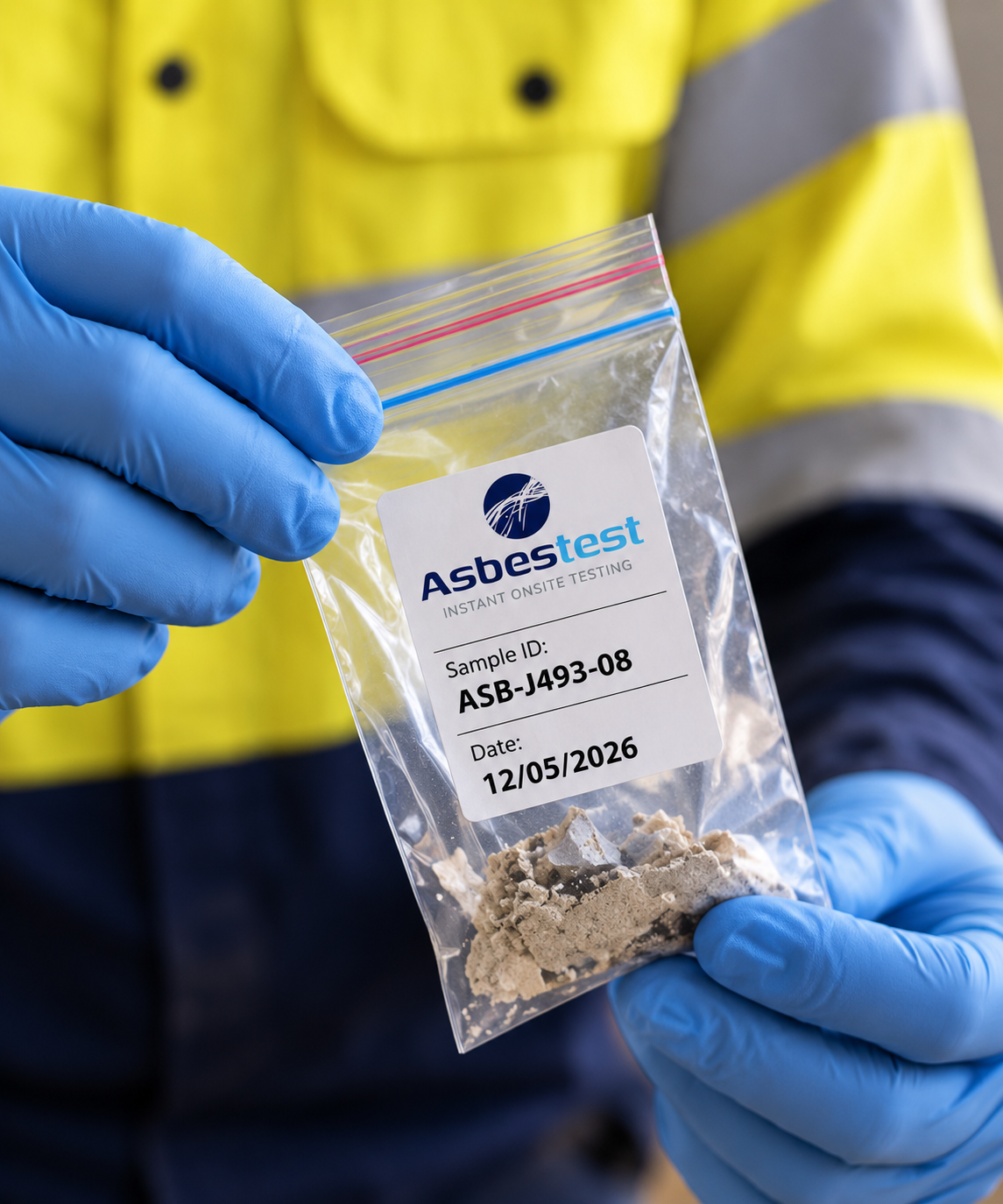
Our technicians use safe sampling practices to carefully collect only the amount of material required for analysis while minimising disturbance to the surrounding material. Samples are then securely contained and handled before being analysed under controlled laboratory conditions.
Because disturbing suspected asbestos-containing materials can release fibres, we recommend having samples collected by an Asbestest technician wherever possible rather than attempting to collect them yourself.
TESTING & SAMPLING
-
For almost all testing, Asbestest provides same-day results.
Our mobile laboratory model allows samples to be collected, prepared and analysed at or near your site, removing many of the transport and processing delays associated with traditional laboratory testing.
We understand that work may need to stop while asbestos results are pending, so our service is designed to get you the information you need as quickly as possible and help minimise unnecessary downtime.
In some cases, a sample may require additional preparation or more detailed analysis, which can extend the turnaround time. If this applies to your sample, our team will let you know.
-
Our reports are designed to give you more than just a test result. They provide a clear, detailed record of what was tested, what was identified and exactly where the sample was collected.
Each report includes your laboratory results, sample identification and description, whether asbestos was detected and, where applicable, the type of asbestos fibres identified.
For samples collected by Asbestest, we also include clear, high-quality photographs and detailed location information, making it easy to identify where asbestos-containing materials are located within your property or project.
We take pride in the quality of our reporting. Results are presented in a clear, professional and easy-to-understand format, giving you a useful record that can support informed decisions and the next steps for your project.
-
-
If your results confirm asbestos, don’t panic. The next step will depend on the location, condition and type of asbestos-containing material, as well as any work you are planning in the area.
Avoid disturbing, cutting, drilling, sanding or damaging the material until you know how it should be safely managed.
Depending on the circumstances, the asbestos may be able to remain safely in place and be appropriately managed, or removal may be recommended before renovation, demolition or other work proceeds.
Your Asbestest report will clearly identify where asbestos was detected and the type of asbestos fibres identified, helping you understand the result and determine the appropriate next steps.
If you’re unsure what to do next, speak with our team. We can help you understand your results and point you in the right direction for appropriate asbestos management or removal.
RESULTS & REPORTING
-
-
The cost of asbestos testing depends on your location, the number of materials requiring testing and whether you require sample collection, an inspection or laboratory analysis only.
At Asbestest, we tailor our service to your property or project so you only pay for the testing you need. Our service can include professional sample collection, onsite analysis using our mobile laboratory, clear photographic reporting and same-day results for almost all testing.
For an accurate price, simply get in touch with our team and tell us a little about your property or project. We can discuss what you need and provide a quote before testing begins.
-
No. Asbestest specialises in asbestos inspection, sampling and laboratory analysis rather than asbestos removal.
Keeping testing and removal separate allows us to provide independent results focused solely on accurately identifying whether asbestos is present and where it is located.
If asbestos is identified and removal is required, we can help you understand your results and point you in the right direction for the next steps. Depending on the type, quantity and circumstances, asbestos removal may need to be carried out by an appropriately licensed asbestos removalist.
-
Asbestest is based on the Central Coast of NSW, with our primary service area extending from Sydney through the Central Coast to Newcastle and surrounding regions.
But we’re not limited by the location of a fixed laboratory. Our mobile laboratory model allows us to deploy testing capabilities where they’re needed, whether that’s a large commercial project elsewhere in Australia or an area affected by a natural disaster where rapid asbestos identification is critical.
For larger commercial, industrial and infrastructure projects, our mobile laboratories can be deployed throughout Australia to provide onsite testing capability and fast turnaround times directly where the work is happening.
If your project is outside our usual service area, get in touch with our team. Chances are, we can come to you.
-
Getting started is simple. Get in touch with our team and tell us a little about your property, project or the material you’re concerned about.
We’ll talk you through what you need, answer any questions and recommend the most appropriate testing approach. From there, we can arrange an inspection or professional sample collection at a time that works for you.
With mobile laboratory testing and same-day results available for almost all testing, we make the process as straightforward as possible, from first contact through to your final report.
Not sure exactly what you need? That’s completely fine. Start with a conversation and we’ll guide you from there.
WORKING WITH ASBESTEST